


The mega IPO season is ready to begin in 2026, and in this context, a healthcare sector company has taken the initiative. Manipal Health Enterprises has submitted its DRHP with the Securities and Exchange Board of India (SEBI). Manipal Hospitals IPO is a mix of fresh issue (INR 8,000 crore) and an Offer for Sale (4.32 crore shares). The IPO is being managed by a consortium of lead managers, including Kotak Mahindra Capital, Axis Capital, Goldman Sachs, Jefferies, J.P. Morgan, UBS, and DBS Bank, with KFin Technologies acting as the registrar.
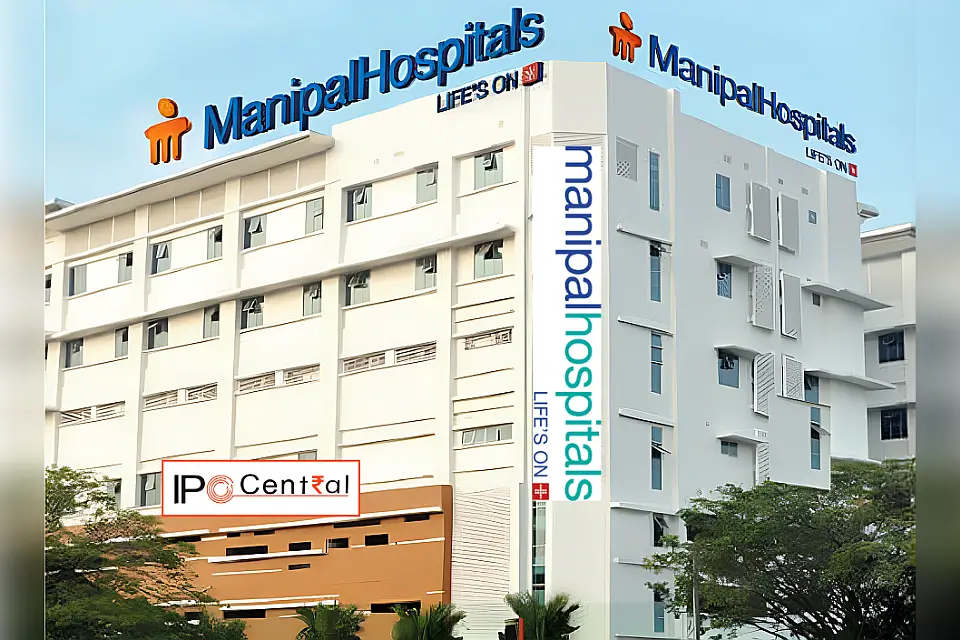
Manipal Hospitals IPO: Business Overview
Manipal Hospitals operates a pan-India network of multispecialty hospitals. As of 30 September 2025, the company managed 38 hospitals (expanding to 48 on a pro forma basis) with a total licensed bed capacity of 12,367. It also holds the title of being the largest private hospital chain in India by bed capacity and the second largest by number of hospitals.
The company has established a dominant leadership position in three key regional hubs:
- Karnataka: The largest player in the state.
- Maharashtra & Goa: Largest player (pro forma) with a significant presence in the Mumbai-Pune corridor.
- Eastern India: Dominant in West Bengal, Odisha, Jharkhand, and Sikkim.
Manipal’s clinical focus is centered on high-acuity CONGO-R specialties (Cardiac, Oncology, Neuro, Gastro, Orthopedics, and Renal sciences), which accounted for 63.68% of its gross inpatient revenue in H1 FY26.
Read Also: Upcoming SEBI IPO Status
Manipal Health IPO: Financial Performance
Manipal Health’s revenue from operations is growing at a CAGR of 30.50% from FY23 to FY25. Improving operational efficiencies are reflected in the steady rise of EBITDA margins.
| Particulars | FY23 | FY24 | FY25* | H1 FY26* |
| Revenue from Operations | 4,839.61 | 6,171.63 | 9,263.56 | 5,312.92 |
| Total Expenses | 4,225.20 | 5,340.51 | 8,664.15 | 4,867.55 |
| EBITDA Margin (%) | 25.38 | 27.43 | 26.50 | 27.09 |
| Profit After Tax (PAT) | 414.20 | 533.20 | 534.80 | 319.47 |
| EPS (INR) | 3.78 | 5.27 | 4.45 | 2.63 |
Figures in INR Crore until specified
*Proforma data
Manipar Health Capital Structure
Manipal Health is backed by a blend of strong promoter leadership and global institutional capital, including Temasek, TPG, and Novo Holdings.
| Name of the Shareholder | No. of Shares | % Pre-Offer Holding |
| Kangto Investments Pte. Ltd. | 31,21,02,855 | 26.45% |
| Manipal Global Health Services | 23,21,47,755 | 19.68% |
| Imperius Healthcare Investments Pte. Ltd. | 20,96,09,340 | 17.77% |
| TPG SG Magazine Pte. Ltd. | 12,71,53,020 | 10.78% |
| Kabru Investments Pte. Ltd. | 6,82,34,415 | 5.78% |
| MEMG India Private Limited | 6,33,84,915 | 5.37% |
| Others (Cypress, Seventy Second, etc.) | 16,50,00,000+ | ~14% |
Utilization of IPO Proceeds
The company intends to use the primary capital raised to significantly deleverage its balance sheet and fund growth.
- Debt Reduction (INR 5,378 Cr): Repayment/prepayment of outstanding borrowings and accrued interest for its subsidiary, Manipal Hospitals.
- Strategic Acquisition (INR 574 Cr): Acquisition of the remaining minority stake in its step-down subsidiary, Sahyadri Hospitals.
- General Corporate Purposes
Competitive Strengths & Strategy
- The “Manipal” Playbook: A proven track record of acquiring and turning around hospitals (e.g., Columbia Asia, AMRI, and Medica). Columbia Asia’s EBITDA margin improved from 27.41% to 31.95% under Manipal’s management.
- Operational Efficiency: Achieved the lowest Average Length of Stay (ALOS) of 2.88 days among major peers in FY25, allowing for higher patient turnover.
- Digital Transformation: Digital revenue (web/app bookings) now accounts for 22.49% of total revenue.
- Future Expansion: Plans to add ~751 licensed beds via brownfield and ~1,943 beds via greenfield projects by 2030.
Final Words
Manipal Health IPO represents a rare opportunity to invest in a scaled, profitable healthcare platform with a clear consolidation strategy. While the issue size is large, the company’s ability to maintain a high ARPOB (INR 70,778 in H1 FY26) and a negative working capital cycle of 16 days demonstrates strong financial discipline. However, investors should monitor the integration of recent large-scale acquisitions like Sahyadri and Medica, which could impact short-term margins.

Rajat Bhati has a strong technical background and 5 years of experience in the stock market. He focuses on equity research, technical analysis, IPO valuations, and risk management, helping investors make clearer, data-backed decisions. Today, he works full-time to educate people about the opportunities in IPO market.

